Find the source before you buy a solution
Water gets into a basement in a handful of ways. It rises through the floor, seeps through the wall, runs in at a crack or along the joint where the wall meets the floor, or comes from a plumbing leak that only looks like groundwater. A plumber's first job is to sort which.
| Where it shows | Likely source | Usual fix |
|---|---|---|
| Along the floor wall joint | Hydrostatic pressure | Interior drain and sump |
| Through a wall crack | Foundation movement or pressure | Crack repair, exterior drainage |
| Damp patch below a pipe | Plumbing leak | Leak detection and pipe repair |
| Floor drain backup | Sewer line | Sewer line cleaning |
| Window well | Poor grade or clogged drain | Clean the well, improve grading |
A damp spot may be a pipe, not the ground. A leak detection visit rules plumbing in or out before you commit to a larger project.
Common waterproofing systems
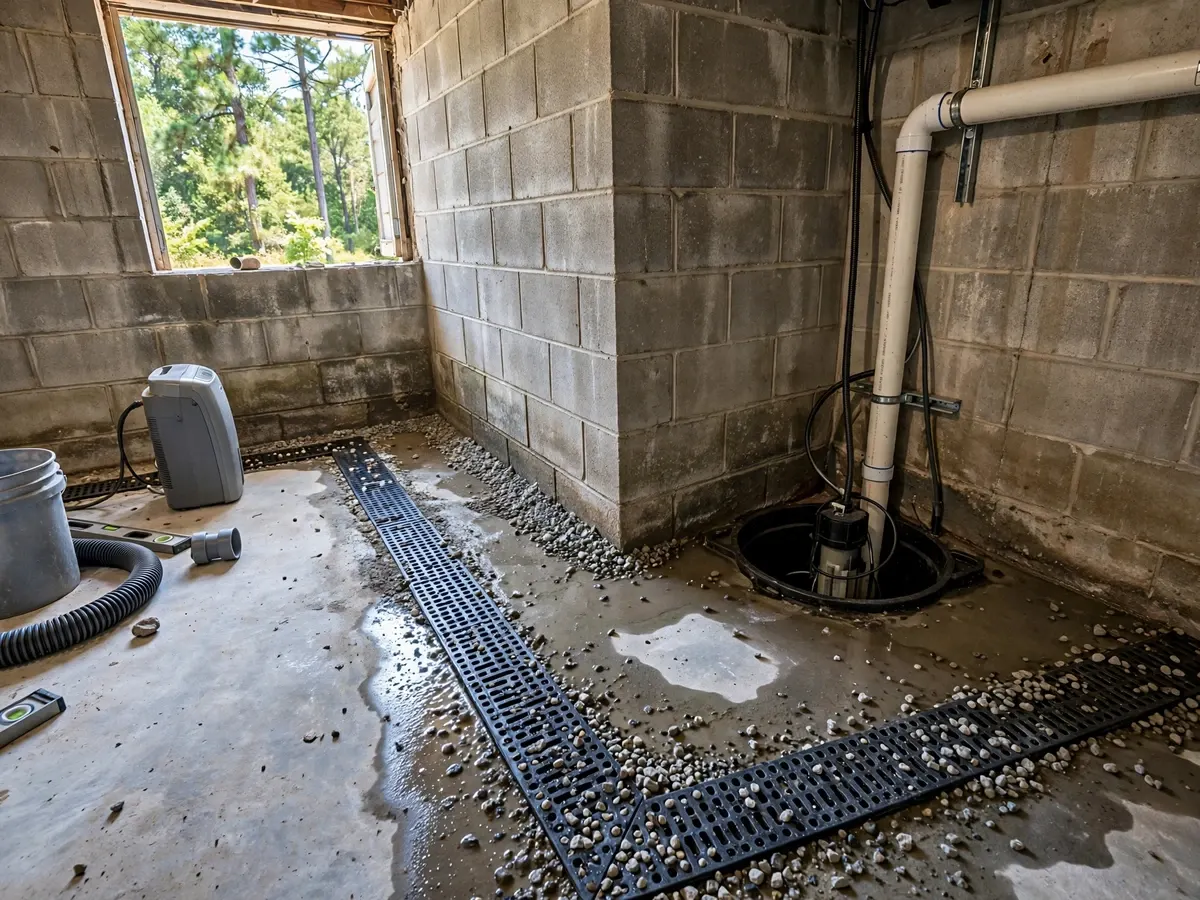
An interior drain system runs a perforated channel along the footing at the base of the wall. Water collects there and flows to a sump pit, where a pump sends it outside. It is the most common retrofit because it works from inside and avoids digging around the house.
Exterior systems dig down to the footing, repair and coat the wall, and install new drain tile. They cost more and disturb the yard. Grading and gutter fixes are a cheap first step. Gutter downspouts should discharge several feet from the foundation, and soil near the wall should slope away from it.
Damp or leaking basement? Call and talk to a licensed plumber.
Call (314) 461-6239Planning around permits and finishing
The City of Ballwin states that plumbing permits are typically needed with basement finishing, and Building Inspections can be reached at (636) 227-2129. If you are planning to finish the basement, solve the water first. Carpet, drywall and insulation hide moisture, and they trap it.
Before you finish a basement
- Run a dehumidifier for a week and track the humidity
- Tape a square of plastic to the floor and wall to see if moisture collects
- Check gutters, downspouts and grading
- Get a camera look at the sewer lateral
- Confirm the sump pump runs and has a backup
A sewer camera, described on the sewer inspection page, is a sensible step before finishing, because a lateral problem under the slab causes damage that looks like a waterproofing failure.
What changes the price of waterproofing
Cost factors we explain before work starts
- System typeInterior drain, exterior excavation and crack repair differ widely.
- Linear footageThe length of wall that needs drainage sets the labor.
- Sump equipmentPump, basin and backup choices affect cost.
- Access and finishFinished floors and walls require demolition and patching.
- LandscapingExterior work disturbs yards, patios and plantings.
Gradual seepage is typically excluded by homeowner policies. Call (314) 461-6239 for your actual number.
Standards note: Drain and sump work follows the International Plumbing Code (IPC) where it connects to the building drainage system. The City of Ballwin lists the International Plumbing Code among its adopted codes, and the Building Inspections Department at (636) 227-2129 can confirm which edition applies.
Basement waterproofing questions from Ballwin homeowners
It can be. A leaking pipe or drain looks like seepage. A plumber checks that first.
Yes. Our line at (314) 461-6239 is open 24/7 and flooded basements are treated as urgent, with same-day appointments when a crew is free.
A pump removes water from a pit. It works best with a drain system that brings water to the pit.
Sealer on the inside can peel under pressure. It is not a substitute for drainage.
Yes. Water behind finished walls causes mold and damage that cost far more to fix.
A lot. Downspouts that dump water at the foundation load the soil next to the wall.
Wet basement? Call and talk to a licensed plumber about the source.
Call (314) 461-6239