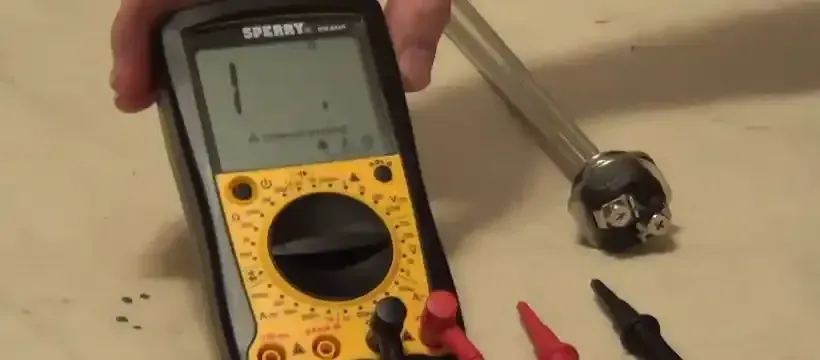
Two metal rods inside an electric water heater do the actual heating. They sit in the water, glow hot when power flows and wear out over time. When one fails, the tank still looks fine from the outside but the water runs lukewarm or cold.
This guide covers the signs of a failed element, why they fail faster in some homes than others and what a replacement involves. The water heater repair page lists the other common failures on tanks of all kinds.
Upper and lower elements do different jobs
The upper element heats the top of the tank first, so you get hot water quickly. The lower element then heats the rest. If the upper one burns out, the tank usually gives no hot water at all. If the lower one burns out, you get a smaller supply that goes cold fast.
| Symptom | Which element | Notes |
|---|---|---|
| No hot water | Upper, or both | Check the breaker and reset first |
| Short hot supply | Lower | Often the first to fail because of sediment |
| Water warm but not hot | Either | A partly failed element or sediment coating |
| Breaker trips on reset | Either, shorted | Leave the power off and call |
Why elements burn out
The lower element sits near the bottom of the tank, where sediment settles. A layer of scale and sediment insulates the element from the water, so it overheats and fails. Elements also wear out from age. Many last several years, but the number is not fixed and depends on water and usage.
Another cause is running the tank partly dry. If a drain valve is opened or a leak lowers the water level, an exposed element burns out in minutes. Always fill a tank fully before switching the power back on.
Before you call
- Turn off the breaker for the water heater
- Check that the reset button on the upper thermostat has not tripped
- Note the voltage and wattage printed on the data label
- Look at the base of the tank for rust or seepage
- Hold off draining the tank until you know what is wrong
What a replacement involves
- 01
Power off and test
The breaker is off and a tester confirms no power at the terminals.
- 02
Shut the water and drain
The cold supply is closed and some or all of the tank is drained below the element.
- 03
Remove the old element
The cover and insulation come off and the element unscrews with a special socket.
- 04
Install the new one
A new gasket and element are fitted and tightened, then the tank is refilled completely.
- 05
Restore power
Only after the tank is full and air is out of the lines does the plumber switch the power on and check the temperature.
A plumber will often flush sediment out of the tank during the same visit, which protects the new element. If the tank leaks around the element or the bottom is badly corroded, replacement of the whole unit is the honest answer, as the water heater replacement page explains.
Choosing the right element
Elements come in different wattages and shapes. Match the voltage and wattage printed on the old element and the data label, and the same thread type. A low-density element, which spreads the heat over a larger surface, tends to resist scale better than a standard one.
Slowing the next failure
Flush a few quarts from the drain valve once a year to carry sediment out. Check the anode rod every few years, since it corrodes first and protects the tank. In a hard water home, a softener upstream saves elements and every other water-using appliance.
Reading the data label and ordering the right part
The data label on the tank tells you almost everything you need. Look for the voltage, usually 240, the wattage of each element, the tank capacity and the model and serial numbers. Photograph it so you have it at the hardware store or on the phone with the dispatcher.
Element wattage is not the place to experiment. Installing a higher wattage than the label allows can overload the wiring and trip the breaker, or worse. Match the original wattage unless the manufacturer lists an approved alternative.
Element style matters as well. Screw-in elements use a threaded base and a gasket, while flange elements use a bolted plate. A plumber will bring both types in common sizes, but knowing which one you have saves a second trip. If you cannot tell, a photo of the access panel with the cover off and the power off is plenty for a dispatcher to work from.